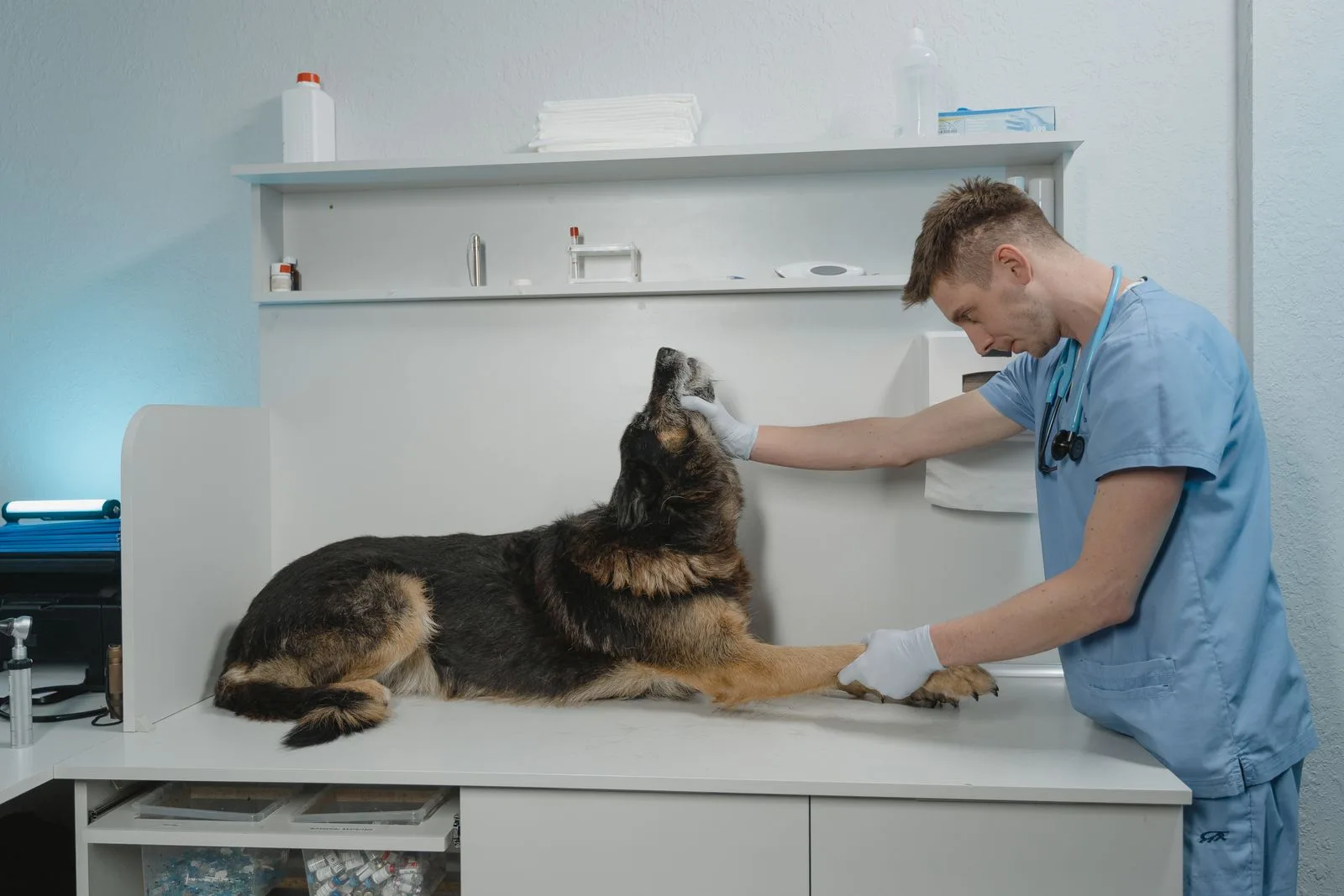
Signs worth a dental check
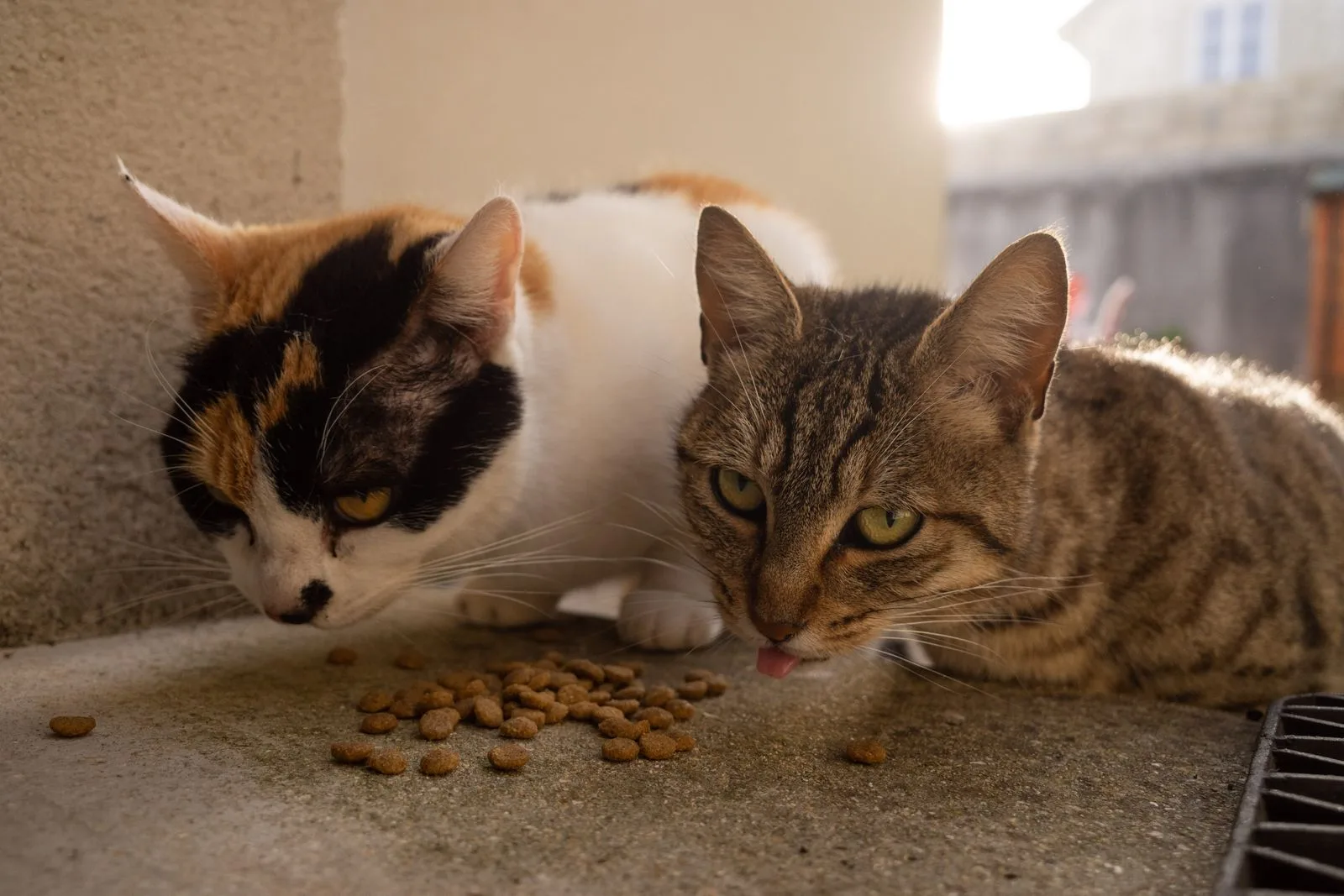
- Bad breath that does not go away
- Dropping food, or chewing on one side
- Pawing at the mouth or rubbing the face
- Red gums, or brown buildup on the teeth
Pets rarely show tooth pain plainly, so these small changes matter.
How a cleaning works
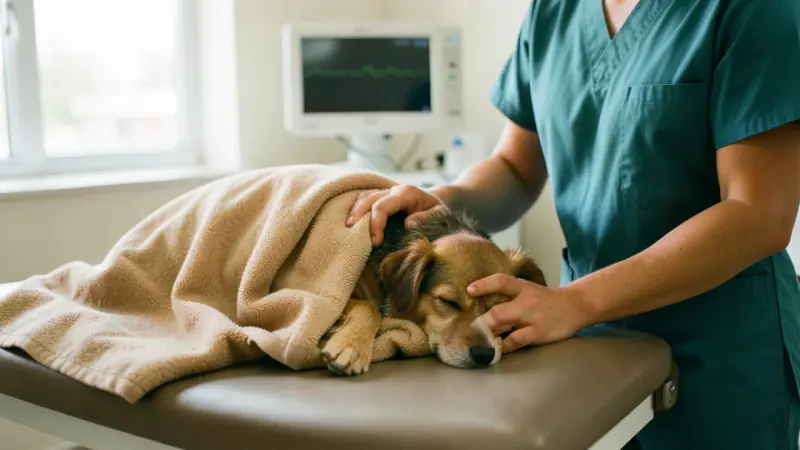
A thorough cleaning needs your pet asleep under anesthesia, so we can clean below the gumline and take dental X-rays. We run bloodwork first, and a technician watches breathing, heart rate and temperature the whole time.
Most pets go home the same afternoon.
If a tooth needs to come out
Some teeth are too damaged to keep. If the X-rays show one, we call you during the procedure before we remove it, and your pet goes home with pain medicine.
Questions about dental care
Is anesthesia safe for an older pet?
Age alone is not a reason to skip dental care. We check bloodwork first and adjust the plan for older pets. Dr. Danforth will go through the risks with you before you decide.
Can I brush my pet's teeth at home?
Yes, and it helps. Use a toothpaste made for pets, never human toothpaste. A technician can show you how at your next visit.
Reviewed by Dr. Corinne Danforth, DVM, October 7, 2026